

How Long Is Erev Rosh Hashanah Service
| Rosh HaShanah | |
|---|---|
 A shofar, pomegranates, vino, apples and honey – symbols of the Rosh HaShanah holiday | |
| Official name | ראש השנה |
| Also called | Jewish New year's day |
| Observed by | Jews |
| Type | Jewish |
| Observances | Praying in synagogue, personal reflection, and hearing or blowing the shofar. |
| Begins | Beginning of first day of Tishrei |
| Ends | Cease of second solar day of Tishrei |
| Date | ane Tishrei, 2 Tishrei |
| 2021 engagement | Sunset, half dozen September – nightfall, 8 September[i] |
| 2022 date | Sunset, 25 September – nightfall, 27 September[1] |
| 2023 date | Sunset, 15 September – nightfall, 17 September[1] |
| 2024 appointment | Sunset, 2 Oct – nightfall, iv October[ane] |
Rosh HaShanah (Hebrew: רֹאשׁ הַשָּׁנָה, Rōʾš hašŠānā , lit. "commencement of the year") is the Jewish New year's day. The biblical name for this vacation is Yom Teruah ( יוֹם תְּרוּעָה , Yōm Tərūʿā ), literally "day of shouting or blasting." Information technology is the first of the Jewish High Holy Days ( יָמִים נוֹרָאִים , Yāmīm Nōrāʾīm ; "Days of Awe"), as specified past Leviticus 23:23–25,[2] that occur in the late summer/early autumn of the Northern Hemisphere. The Loftier Holy Days comprises both Rosh HaShanah and Yom Kippur.
Rosh Hashanah is a 2-day observance and commemoration that begins on the first twenty-four hours of Tishrei, which is the seventh month of the ecclesiastical yr. In contrast to the ecclesiastical lunar new year on the start day of the first calendar month Nisan, the spring Passover calendar month which marks Israel's exodus from Egypt, Rosh Hashanah marks the beginning of the ceremonious year, according to the teachings of Judaism, and is the traditional ceremony of the creation of Adam and Eve, the first man and woman according to the Hebrew Bible, as well as the initiation of humanity's part in God's world.
Rosh Hashanah community include sounding the shofar (a cleaned-out ram'southward horn), as prescribed in the Torah, following the prescription of the Hebrew Bible to "enhance a racket" on Yom Teruah. Its rabbinical community include attending synagogue services and reciting special liturgy virtually teshuva, as well equally enjoying festive meals. Eating symbolic foods is now a tradition, such as apples dipped in honey, hoping to evoke a sugariness new year.
Etymology [edit]
Rosh is the Hebrew word for "head", ha is the definite commodity ("the"), and shana ways year. Thus Rosh HaShanah ways "start of the yr", referring to the Jewish day of new year.[3] [4]
The term Rosh Hashanah in its current significant does non announced in the Torah. Leviticus 23:24[5] refers to the festival of the get-go day of the seventh calendar month as zikhron teru'ah ("a memorial of bravado [of horns]"); it is also referred to in the same part of Leviticus as ' שַׁבַּת שַׁבָּתוֹן ' ( shabbat shabbaton ) or ultimate Sabbath or meditative rest day, and a "holy day to God". These same words are commonly used in the Psalms to refer to the anointed days. Numbers 29:1[vi] calls the festival yom teru'ah ("day of blowing [the horn]").
The term rosh hashanah appears once in the Bible (Ezekiel xl:1),[7] where information technology has a different meaning: either generally the fourth dimension of the "beginning of the year", or possibly a reference to Yom Kippur,[8] or to the month of Nisan.[a] [12]
In the Jewish prayer-books (the Siddur and Machzor), Rosh Hashanah is also called Yom Hazikaron (the day of remembrance),[iv] not to be dislocated with the modern Israeli remembrance day of the same name.
Rosh Hashanah marks the start of a new year's day in the Hebrew calendar (one of four "new year" observances that define various legal "years" for different purposes as explained in the Mishnah and Talmud).[four] Information technology is the new year's day for people, animals, and legal contracts. The Mishnah also sets this solar day aside as the new year's day for calculating agenda years, shmita years, and yovel years. Rosh Hashanah commemorates the creation of Man.[13]
Origin [edit]
The origin of the Hebrew New year is connected to the beginning of the economic twelvemonth in the agricultural societies of the aboriginal Near East.[fourteen] The New year was the first of the bicycle of sowing, growth, and harvest; the harvest was marked past its own ready of major agricultural festivals.[xiv] The Semites more often than not set the beginning of the new year in autumn, while other ancient civilizations chose bound for that purpose, such every bit the Persians or Greeks; the primary reason was agricultural in both cases, the time of sowing the seed and bringing in the harvest.[14]
In Jewish law, four major New Years are observed, each one marking a first of sorts. The lunar calendar month Nisan (ordinarily corresponding to the months March–April in the Gregorian calendar) is when a new year's day is added to the reign of Jewish kings, and it marks the get-go of the year for the 3 Jewish pilgrimages.[fifteen] Its injunction is expressly stated in the Hebrew Bible: "This month shall exist unto you the showtime of months" (Exodus 12:2).[xvi] However, ordinary years, Breather years, Jubilees, and dates inscribed on legal deeds and contracts are reckoned differently; such years brainstorm on the first 24-hour interval of the lunar calendar month Tishri (usually respective to the months September–Oct in the Gregorian calendar). Their injunction is expressly stated in the Hebrew Bible: "3 times in the year you shall keep a feast unto me... the feast of unleavened bread (Passover)... the feast of harvest (Shavuot)... and the banquet of ingathering (Sukkot) which is at the departing of the year" (Exodus 23:14–sixteen).[17] "At the departing of the year" implies that the new year's day begins here.[18]
The reckoning of Tishri every bit the beginning of the Jewish year began with the early Egyptians and was preserved by the Hebrew nation,[19] being also alluded to in the Hebrew Bible (Genesis seven:11)[20] when describing the Bully Drench at the fourth dimension of Noah. This began during the "second month" (Marheshvan) counting from Tishri, a view that has largely been accepted past the Sages of Israel.[21]
Religious significance [edit]
The Mishnah contains the second known reference to Rosh Hashanah every bit the "twenty-four hour period of judgment" (Yom haDin).[22] In the Talmud tractate on Rosh Hashanah, it states that three books of account are opened on Rosh Hashanah, wherein the fate of the wicked, the righteous, and those of the intermediate grade are recorded. The names of the righteous are immediately inscribed in the Book of Life and they are sealed "to live". The intermediate class is immune a respite of ten days, until Yom Kippur, to reverberate, repent, and become righteous;[23] the wicked are "blotted out of the book of the living forever."[24]
Some midrashic descriptions draw God equally sitting upon a throne, while books containing the deeds of all humanity are opened for review, and each person passes in front of him for evaluation of his or her deeds.[25]
"The Holy I said, 'on Rosh Hashanah recite before Me [verses of] Sovereignty, Remembrance, and Shofar blasts ( malchiyot, zichronot, shofrot ): Sovereignty and so that y'all should brand Me your King; Remembrance so that your remembrance should rise upwardly before Me. And through what? Through the Shofar.' (Rosh Hashanah 16a, 34b)"[26]
This is reflected in the prayers composed past classical rabbinic sages for Rosh Hashanah institute in traditional machzorim where the theme of the prayers is the "coronation" of God as King of the universe, in training for the acceptance of judgments that will follow on that twenty-four hour period.
Shofar blowing [edit]
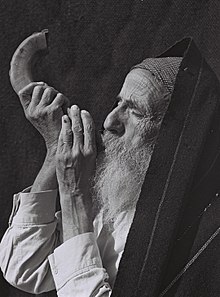
Jewish elder blowing the ram's horn (shofar)
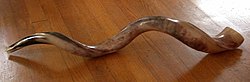
Shofar blowing for Rosh Hashana, Ashkenaz version
The best-known ritual of Rosh Hashanah is the blowing of the shofar, a musical musical instrument made from an animal horn. The shofar is blown at various points during the Rosh Hashanah prayers, with a full of 100 blasts on each day.[27]
While the bravado of the shofar is a Biblical statute, it is likewise a symbolic "wake-up call", stirring Jews to mend their ways and repent. The shofar blasts call out: "Sleepers, wake up from your slumber! Examine your ways and repent and remember your Creator."[28]
Prayer service [edit]
On Rosh Hashanah 24-hour interval, religious poems called piyyutim , are added to the regular services. A special prayer book, the mahzor (plural mahzorim ), is used on Rosh Hashanah and Yom Kippur.[29] A number of additions are made to the regular service, nigh notably an extended repetition of the Amidah prayer for both Shacharit and Mussaf. The shofar is blown during Mussaf at several intervals.[thirty] (In many synagogues, fifty-fifty lilliputian children come and hear the shofar being blown.)[ further explanation needed ] Biblical verses are recited at each betoken. Co-ordinate to the Mishnah, ten verses (each) are said regarding kingship, remembrance, and the shofar itself, each accompanied past the blowing of the shofar. A variety of piyyutim , medieval penitential prayers, are recited regarding themes of repentance. The Alenu prayer is recited during the repetition of the Mussaf Amidah.[31]
The narrative in the Book of Genesis describing the announcement of Isaac's birth and his subsequent birth[32] is office of the Torah readings in synagogues on the first day of Rosh Hashanah, and the narrative of the sacrifice and bounden of Isaac[33] is read in synagogue on the 2d mean solar day of Rosh Hashanah.
The Mussaf Amidah prayer on Rosh Hashanah is unique in that apart from the first and final three blessings, it contains three key blessings making a total of nine. These blessings are entitled "Malchuyot" (Kingship, and also includes the blessing for the holiness of the 24-hour interval as is in a normal Mussaf), "Zichronot" (Remembrance), and "Shofarot" (concerning the shofar). Each section contains an introductory paragraph followed by selections of verses virtually the "topic". The verses are three from the Torah, iii from the Ketuvim, three from the Nevi'im, and one more than from the Torah. During the repetition of the Amidah, the shofar is sounded (except on Shabbat) later the approval that ends each section.[34] Recitation of these 3 blessings is first recorded in the Mishna,[35] though writings by Philo and perhaps even Psalms 81[36] suggest that the blessings may have been recited on Rosh Hashanah even centuries earlier.[37]
Customs [edit]
Days earlier Rosh Hashanah [edit]
Rosh Hashanah is preceded by the month of Elul, during which Jews are supposed to begin a self-examination and repentance, a procedure that culminates in the ten days of the Yamim Nora'im, the Days of Awe, beginning with Rosh Hashanah and ending with the holiday of Yom Kippur.[38] [39]
The shofar is traditionally blown each morning for the entire month of Elul, the month preceding Rosh Hashanah. The sound of the shofar is intended to awaken the listeners from their "slumbers" and alarm them to the coming judgment.[forty] [38] The shofar is non diddled on Shabbat.[41]
In the menses leading upwards to Rosh Hashanah, penitential prayers called selichot, are recited. The Sephardic tradition is to showtime at the first of Elul, while the Ashkenazi exercise is to start a few days before Rosh Hashanah.[38]
The day earlier Rosh Hashanah day is known as Erev Rosh Hashanah ("Rosh Hashanah eve").[42] It is the 29th day of the Hebrew month of Elul, ending at sundown, when Rosh Hashanah commences. Some communities perform Hatarat nedarim (a nullification of vows) afterwards the morning prayer services.[43] Many Orthodox men immerse in a mikveh in honor of the coming day.[44]
Symbolic foods [edit]


Traditional Rosh Hashanah foods: Apples dipped in honey, pomegranates, vino for kiddush
Rosh Hashanah meals usually include apples dipped in honey to symbolize a sugariness new year;[45] this is a belatedly medieval Ashkenazi addition, though it is now almost universally accepted.[ commendation needed ] Other foods with a symbolic meaning may be served, depending on local minhag ("custom"), such as the head of a fish (to symbolize the prayer "let us be the caput and not the tail").[46]
Many communities hold a "Rosh Hashanah seder" during which blessings are recited over a multifariousness of symbolic dishes.[47] [48] [49] The blessings have the incipit "Yehi ratzon", significant "May it be Thy will." In many cases, the name of the nutrient in Hebrew or Aramaic represents a play on words (a pun). The Yehi Ratzon platter may include apples (dipped in dear, baked or cooked as a compote called mansanada); dates; pomegranates; black-eyed peas; pumpkin-filled pastries called rodanchas; leek fritters chosen keftedes de prasa; beets; and a whole fish with the head intact. It is also common among Sephardim to eat stuffed vegetables called legumbres yaprakes.[50]
Some of the symbolic foods eaten are dates, black-eyed peas, leeks, spinach, and gourd, all of which are mentioned in the Talmud:[51] "Let a man exist accepted to eat on New year gourds (קרא), and fenugreek (רוביא),[52] leeks (כרתי), beet [leaves] (סילקא), and dates (תמרי)."
Pomegranates are used in many traditions, to symbolize being fruitful like the pomegranate with its many seeds.[53] Typically, round challah breadstuff is served, to symbolize the wheel of the twelvemonth.[53] [45] From ancient to quite modern age, lamb head or fish head were served. Nowadays, gefilte fish and lekach are commonly served by Ashkenazic Jews on this holiday. On the second night, new fruits are served to warrant the inclusion of the shehecheyanu blessing.[46]
Tashlikh [edit]

The ritual of tashlikh is performed on the afternoon of the kickoff 24-hour interval of Rosh Hashanah past Ashkenazic and near Sephardic Jews (but non by Spanish and Portuguese Jews or some Yemenites). Prayers are recited about natural flowing water, and one'southward sins are symbolically bandage into the h2o. Many also have the custom to throw bread or pebbles into the water, to symbolize the "casting off" of sins. In some communities, if the first day of Rosh Hashanah occurs on Shabbat, tashlikh is postponed until the 2nd day. The traditional service for tashlikh is recited individually and includes the prayer "Who is like unto you, O God... And You will bandage all their sins into the depths of the bounding main", and Biblical passages including Isaiah 11:9 ("They volition non hurt nor destroy in all My holy mountain, for the earth shall exist as full of the knowledge of the Lord as the waters cover the sea") and Psalms 118:five–nine, Psalms 121 and Psalms 130, as well as personal prayers. Though once considered a solemn individual tradition, it has become an increasingly social ceremony proficient in groups. Tashlikh tin can be performed whatsoever time until Hoshana Rabba, and some Hasidic communities perform Tashlikh on the day before Yom Kippur.[54]
Greetings [edit]
The Hebrew common greeting on Rosh Hashanah is Shanah Tovah (Hebrew: שנה טובה; pronounced [ˈʃona ˈtɔ͡ɪva] in many Ashkenazic communities and pronounced [ʃaˈna toˈva] in Israeli and Sephardic communities), which translated from Hebrew means "[accept a] skillful year".[55] Often Shanah Tovah Umetukah (Hebrew: שנה טובה ומתוקה), significant "[have a] Good and Sugariness Twelvemonth", is used.[56] In Yiddish the greeting is אַ גוט יאָר "a gut yor" ("a good twelvemonth") or אַ גוט געבענטשט יאָר "a gut gebentsht yor" ("a good blest twelvemonth").[55] The formal Sephardic greeting is Tizku Leshanim Rabbot ("may y'all merit many years"),[57] to which the respond is Ne'imot VeTovot ("pleasant and adept ones"); while in Ladino, they say אנייאדה בואינה, דולסי אי אליגרי "anyada buena, dulse i alegre" ("may you lot accept a adept, sweet and happy New year").[ citation needed ]
A more formal greeting commonly used among religiously observant Jews is Ketivah VaChatimah Tovah (Hebrew: כְּתִיבָה וַחֲתִימָה טוֹבָה), which translates equally "A good inscription and sealing [in the Volume of Life]",[55] or L'shanah tovah tikatevu 5'tichatemu pregnant "May you be inscribed and sealed for a expert year".[56] [58] Later Rosh Hashanah ends, the greeting is changed to G'mar chatimah tovah (Hebrew: גמר חתימה טובה) significant "A proficient concluding sealing", until Yom Kippur.[55] Subsequently Yom Kippur is over, until Hoshana Rabbah, as Sukkot ends, the greeting is Gmar Tov (Hebrew: גְּמָר טוֹב), "a adept conclusion".[59]
In Karaite Judaism [edit]
Unlike the denominations of Rabbinical Judaism, Karaite Judaism believes the Jewish New Yr starts with the first month and celebrates this holiday only as it is mentioned in the Torah, that is as a solar day of rejoicing and shouting.[60] Additionally, Karaites believe the adoption of the proper noun "Rosh Hashanah" in place of Yom Teruah "is the outcome of pagan Babylonian influence upon the Jewish nation,[60] that began during the Babylonian exile with the adoption of the Babylonian month names instead of the numbering present in the Torah (Leviticus 23; Numbers 28).[60] Karaites let no work on the twenty-four hour period except what is needed to prepare food (Leviticus 23:23, 24).[61]
In Samaritanism [edit]
Samaritans preserve the biblical name of the holiday, Yom Teruah, and practice not consider the day to be a New year's day'southward day.[62]
Elapsing and timing [edit]
The Torah defines Rosh Hashanah as a 1-day celebration, and since days in the Hebrew calendar begin at sundown, the starting time of Rosh Hashanah is at sundown at the end of 29 Elul. Since the time of the destruction of the Second Temple of Jerusalem in 70 CE and the fourth dimension of Rabban Yohanan ben Zakkai, normative Jewish police force appears to exist that Rosh Hashanah is to exist historic for two days, considering of the difficulty of determining the date of the new moon.[8] Nonetheless, there is some prove that Rosh Hashanah was celebrated on a single day in Israel as belatedly every bit the thirteenth century CE.[63]
Orthodox and Conservative Judaism now by and large notice Rosh Hashanah for the get-go two days of Tishrei, fifty-fifty in Israel where all other Jewish holidays dated from the new moon last just i day. The 2 days of Rosh Hashanah are said to plant "Yoma Arichtah" (Aramaic: "ane long day"). In Reform Judaism, while most congregations in North America observe only the showtime twenty-four hour period of Rosh Hashanah, some follow the traditional ii-day observance as a sign of solidarity with other Jews worldwide.[64] Karaite Jews, who do non recognize Rabbinic Jewish oral law and rely on their own understanding of the Torah, observe only i day on the first of Tishrei, since the second mean solar day is not mentioned in the Written Torah.[65]
Date [edit]
Originally, the date of Rosh Hashanah was adamant based on observation of the new moon ("molad"), and thus could fall on any day of the week. Nevertheless, around the third century CE, the Hebrew calendar was fixed, such that the get-go day of Rosh Hashanah never falls out on Sunday, Wednesday, or Friday.[66] [67]
Rosh Hashanah occurs 163 days after the get-go day of Passover, and thus is usually (only not ever) determined by the new moon closest to the autumnal equinox.
In terms of the Gregorian calendar, the earliest date on which Rosh Hashanah tin autumn is five September, as happened in 1842, 1861, 1899, and 2013. The latest Gregorian date that Rosh Hashanah tin occur is 5 October, as happened in 1815, 1929, and 1967, and will happen again in 2043. After 2089, the differences between the Hebrew calendar and the Gregorian calendar will result in Rosh Hashanah falling no before than 6 September. Starting in 2214, the new latest date volition exist six October.[68]
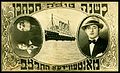
Gallery of Rosh Hashanah greeting cards [edit]
-
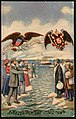
United States, 1900
-

Austria, 1904
-

Us, 1908
-

-

Republic of austria-Hungary/Germany, 1914
-
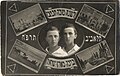
Tel Aviv, 1927
-

Poland, 1931
-
-
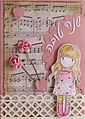
Israel, 2012
See besides [edit]
- Christian observances of Jewish holidays: Feast of Trumpets
- Jewish holidays
- Rosh Hashana kibbutz
- Unetanneh Tokef
Notes [edit]
- ^ Exodus 12:2[9] refers to the month of Aviv (later on renamed Nisan) every bit "the first month of the year", and in Ezekiel 45:eighteen,[10] "the first month" unambiguously refers to Nisan, the month of Passover, equally fabricated plainly by Ezekiel 45:21.[eleven]
References [edit]
- ^ a b c d "Dates for Rosh Hashanah". Hebcal.com by Danny Sadinoff and Michael J. Radwin (CC-By-3.0). Retrieved 26 August 2018.
- ^ Leviticus 23:23–25
- ^ "rosh hashanah". Origin and significant of phrase rosh hashanah past Online Etymology Dictionary . Retrieved 29 September 2019.
- ^ a b c "What Is Rosh Hashanah? – The Jewish New Year, anniversary of the cosmos of Adam and Eve, a day of judgment and coronation, and sounding of the shofar ... – High Holidays". Chabad Lubavitch. 27 August 2019. Retrieved ane September 2019.
- ^ Leviticus 23:24
- ^ Numbers 29:ane
- ^ Ezekiel 40:1
- ^ a b Jacobs, Louis (2007). "Rosh Ha-Shanah". In Berenbaum, Michael; Skolnik, Fred (eds.). Encyclopaedia Judaica. Vol. 17 (2d ed.). Detroit: Macmillan Reference. pp. 463–66. ISBN978-0-02-866097-4.
- ^ Exodus 12:2
- ^ Ezekiel 45:eighteen
- ^ Ezekiel 45:21
- ^ Mulder, Otto (2003). Simon the Loftier Priest in Sirach fifty: An Exegetical Study of the Significance of Simon the Loftier Priest As Climax to the Praise of the Fathers in Ben Sira's Concept of the History of Israel. Brill. p. 170. ISBN978-9004123168.
- ^ Chein, Rochel (27 August 2019). "High Holidays". Why is Rosh Hashanah considered the Jewish New year? . Retrieved 1 September 2019.
- ^ a b c Isidore Singer, J. F. McLaughlin, Wilhelm Bacher, Judah David Eisenstein (1901–1906). "New-Year". Jewish Encyclopedia. New York: Funk and Wagnalls. Retrieved 10 September 2018.
{{cite encyclopedia}}: CS1 maint: uses authors parameter (link) - ^ Mishnah, Rosh Hashanah ane:1
- ^ Exodus 12:2
- ^ Exodus 23:fourteen–sixteen
- ^ Babylonian Talmud; Poskim
- ^ Josephus writes in Antiquities of the Jews (one.3.§ 3) concerning the "2d month", when the inundation of waters appeared in the days of Noah: "This calamity happened in the six-hundredth year of Noah's authorities, in the second month, called by the Macedonians Dius, but by the Hebrews Marchesuan; for so did they club their yr in Egypt; but Moses appointed that Nisan, which is the same with Xanthicus, should be the first month for their festivals, because he brought them out of Egypt in that month: so that this month began the year as to all the solemnities they observed to the honour of God, although he preserved the original order of the months equally to selling and ownership, and other ordinary diplomacy."
- ^ Genesis 7:11
- ^ Babylonian Talmud, Rosh Hashana 11b–12a; Rabbi Yehoshua says that the flood was in the second month counting from Nisan, but Rabbi Eliezer says that it was in the second month counting from Tishri, and the Sages concur with Rabbi Eliezer; Aramaic Targum of Pseudo-Jonathan ben Uzziel on Genesis seven:xi: "In the half dozen-hundredth twelvemonth of the life of Noah, in the second month, existence the month of Marheshvan, for hitherto they did not count the [lunar] months except from Tishri, insofar that it is the New Yr for the completion of the universe."
- ^ Tractate on Rosh Hashanah I,two
- ^ Tractate on Rosh Hashanah, I,16b
- ^ Psalms 69:29
- ^ "Rosh Hashana from the Torah to the Temples". Retrieved 17 September 2020.
- ^ ArtScroll Machzor, Rosh Hashanah. Overview, p. xv.
- ^ Kitov, Rabbi Eliyahu. "1 Hundred Sounds". Retrieved vii October 2018.
- ^ Mishneh Torah, Laws of Repentance 3:4.
- ^ Shurpin, Yehuda (25 September 2019). "Why Is the High Vacation Prayerbook Called a "Machzor"? – Questions & Answers". Chabad Lubavitch . Retrieved 29 September 2019.
- ^ "Services at a Glance – High Holidays". Chabad Lubavitch. 25 September 2019. Retrieved 29 September 2019.
- ^ Golden, Ave (1983). Rosh Hashanah – Its Significance, Laws, and Prayers: Presentation Anthologized from Talmudic Traditional Sources. Brooklyn: Mesorah Publications. p. 101. ISBN978-0899061955.
- ^ Genesis 21
- ^ Genesis 22
- ^ "Rosh Hashanah Musaf Amidah". My Jewish Learning. 17 February 2003. Retrieved 29 September 2019.
- ^ Mishnah Rosh Hashanah 4:5–vi
- ^ Psalms 81
- ^ Hoenig, Sidney B. "Origins of the Rosh Hashanah Liturgy." The Jewish Quarterly Review, vol. 57, 1967, pp. 312–31. JSTOR 1453499. Accessed 16 January 2020.
- ^ a b c "The Month of Elul – Inventory Flavour – Mitzvah Minutes". Chabad Lubavitch. 25 September 2019. Retrieved 29 September 2019.
- ^ "The High Holidays – Rosh Hashanah and Yom Kippur – Yamim Nora'im (Days of Awe) or High Holy Days". Chabad Lubavitch. 25 September 2019. Retrieved 29 September 2019.
- ^ Maimonides, Yad, Laws of Repentance 3:4
- ^ Jewish Law permits the Shofar to be blown in the presence of a rabbinical court called the Sanhedrin, which had not existed since aboriginal times. A contempo group of Orthodox rabbis in Israel challenge to institute a mod Sanhedrin held, for the first time in many years, an Orthodox shofar-blowing on Shabbat for Rosh Hashanah in 2006. TheSanhedrin.net: Shofar Bravado on Shabbat (translation of Haaretz Archived 26 January 2009 at the Wayback Automobile article)
- ^ "What Practice We Mean past 'Erev Rosh Hashanah?'". The Forward. 24 September 2014. Retrieved i September 2019.
- ^ "Disparateness of Known Vows in Hatarat Nedarim – High Holidays". Chabad Lubavitch. 27 August 2019. Retrieved 1 September 2019.
- ^ Krakowski, Rabbi Y. Dov (24 September 2014). "Hilchos U'Minhagei Rosh Hashanah". Jewish Holidays . Retrieved 1 September 2019.
- ^ a b "Rosh Hashanah". history.com. 27 September 2019. Retrieved 29 September 2019.
- ^ a b "How Is Rosh Hashanah Celebrated? – An Overview of Rosh Hashanah'southward Traditions and Customs – Loftier Holidays". Chabad Lubavitch. 25 September 2019. Retrieved 29 September 2019.
- ^ Exploring Sephardic Customs and Traditions, Marc Angel, p. 49
- ^ "Cursory Summary of the Keter Shem Tov's (Rabbi Shem Tov Gaguine) comments on the various minhagim proficient on the two nights of Rosh HaShanah at the evening seudoth (vol 6, pp. 96–101) compiled and explained by Albert South. Maimon". Archived from the original on xv June 2009.
- ^ Debby Segura (xviii September 2008). "The Rosh Hashanah Seder". Retrieved 10 September 2018.
- ^ Sternberg, Robert The Sephardic Kitchen: The Healthful Nutrient and Rich Culture of the Mediterranean Jews, Harper Collins, 1996, pp. 320–21, ISBN 0-06-017691-ane
- ^ Babylonian Talmud (Keritot 6a)
- ^ Rashi (Keritot 6a) calls rubia by its Hebrew name "tiltan" (Heb. תלתן), which word he explains elsewhere as being fenugreek. Nonetheless, Rabbi Hai Gaon, in 1 of his responsum in "Otzar Ha-Geonim", seems to propose that "rubia" (Heb. רוביא) means cowpeas, or what others call, "black-eyed peas" (פול המצרי). Rabbi Hai Gaon's disciple, Rabbi Nissim ben Jacob (in his Commentary known every bit Ketav Hamafteah), thus explains the word לוביא, in our instance spelled רוביא, as meaning not-other than cowpeas (פול המצרי), describing them as having a "dark eye in its center". Jews of Due north-Africa traditionally brand use of stringed beans in place of rubia.
- ^ a b Spice and Spirit: The Complete Kosher Jewish Cookbook, 1990, New York, p. 508
- ^ Kumer, Dinka (25 September 2019). "What is Tashlich? – High Holidays". Chabad Lubavitch . Retrieved 29 September 2019.
- ^ a b c d Posner, Menachem. "What Is Shanah Tovah? New Twelvemonth Greeting Translation and More: The significant of the traditional Rosh Hashanah wishes". Chabad.org. Retrieved 10 September 2018.
- ^ a b Bottner, Lauren (21 September 2011). "From Selichot to Simchat Torah". Jewish Periodical. TRIBE Media. Retrieved 10 September 2018.
- ^ "What is in a Rosh Hashanah greeting?". Haaretz. 17 September 2012. Retrieved 29 September 2019.
- ^ "Jewish Vacation Greeting Chart". Patheos.com. 26 July 2012. Archived from the original on 26 September 2014. Retrieved ten September 2018.
- ^ Steinmetz, Sol (2005). Dictionary of Jewish Usage: A Guide to the Use of Jewish Terms. Lanham, Md: Rowman & Littlefield. p. 53. ISBN978-0742543874.
- ^ a b c "How Yom Teruah Became Rosh Hashanah". Nehemia's Wall. 26 September 2014. Retrieved x September 2018.
- ^ "Karaite Jews of America". The Karaite Jews of America. Retrieved 10 September 2018.
- ^ "Festival 2016: 7 Festivals Celebrated in the Israelite Samaritan Twelvemonth". Israelite Samaritan Information Institute. 21 October 2012. Retrieved 1 September 2019.
- ^ Rav David Bar-Hayim. "Rosh HaShanna in Israel: Ane Solar day or Ii?". Machon Shilo website. Jerusalem: Machon Shilo. Retrieved 10 September 2018.
Includes link for Audio Shiur in English
- ^ "Do Reform Jews Gloat One or Two Days of Rosh HaShanah?". 21 Baronial 2013. Retrieved 10 September 2018.
- ^ Greenspoon, Leonard Jay (2010). Rites of Passage: How Today'southward Jews Celebrate, Commemorate, and Commiserate. Westward Lafayette, IN: Purdue University Press. p. 144. ISBN978-1557535771.
- ^ Tractate Rosh Hashanah 20a
- ^ A popular mnemonic is "lo adu rosh" ("Rosh [Hashanah] is non on adu"), where adu has the numerical value 1-four-6 (corresponding to the numbering of days in the Jewish week, in which Sat night and Sunday daytime make upwardly the first twenty-four hour period).
- ^ "An early on Rosh HaShanah? – Inquire the Rabbi". Oztorah.com. Retrieved ten September 2018.
Bibliography [edit]
- Angel, Marc (2000). Exploring Sephardic Community and Traditions. Hoboken, NJ: KTAV Pub. House in association with American Sephardi Federation, American Sephardi Federation – South Florida Chapter, Sephardic House. ISBN0-88125-675-seven.
External links [edit]
- Torah Content on Rosh Hashana – Text, sound & video classes, Times, and Q&A nigh Rosh HaShana
- Marker the New Year From the Yad Vashem'south Collections – Online exhibition on the celebration of Rosh Hashanah and Yom Kippur before, during, and after the Holocaust
- Rosh Hashanah Prayers by Chazzanim – an audio, video and printed guide to the Rosh Hashanah prayers

How Long Is Erev Rosh Hashanah Service,
Source: https://en.wikipedia.org/wiki/Rosh_Hashanah
Posted by: simmonsscablevoled1962.blogspot.com
0 Response to "How Long Is Erev Rosh Hashanah Service"
Post a Comment