

Who Is Going To Win In The Long Run In Providing Cloud Services
Companies continue to make the move into deject computing. Whether it's using an individual deject service or migrating your unabridged infrastructure into a new deject ecosystem, you're not lone in seeking out the added benefits of cloud technologies.
From improvements in scalability, security, and flexibility to reductions in cost and environmental touch on, there are a wealth of reasons to make the motility into the cloud. Of form, the transition is not as easy equally information technology once was.
Since its inception, the cloud ecosystem has become a complex, e'er-expanding myriad of providers, technologies, products, and services. Every bit y'all attempt to piece together the different combinations across these verticals your option of options tin quickly climb into the 1000s. It chop-chop becomes apparent there is a affair as too much choice.
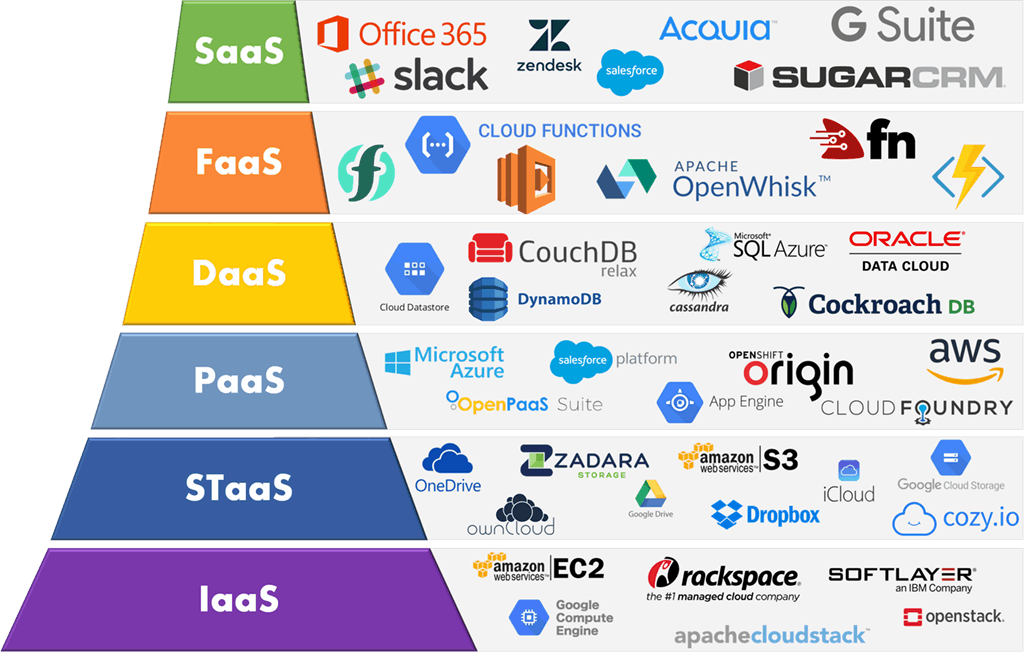
Like in whatever industry, a handful of companies rise above the rest to become market leaders. When nosotros call up virtually cloud calculating providers, at that place are three names that meridian the list: Google Cloud Platform, Amazon Spider web Services, and Microsoft Azure.
Today, we will be comparing 2 cloud giants, Google Cloud Platform and Amazon Web Services. We'll be taking a deep dive into the products and services of each provider. Seeking to add clarity and simplify the procedure comparison these ii cloud providers in lodge to make an informed decision.
Although we exclusively utilize the Google Cloud Platform hither at Kinsta, we'll be providing you with an unbiased opinion. Both platforms offer extensive benefits, but which is right for you will ultimately depend on your company's own unique requirements.
Why Google Cloud vs Amazon Web Services
If you lot're planning on using cloud services, the three providers you volition undoubtedly discover Google Cloud, Amazon Web Services, and Microsoft Azure. Today, nosotros will be focussing on comparing ii of these, specifically Google Cloud vs AWS.
These cloud giants are household names in the tech space. Both organizations have dominated for more than a decade in their respective industries. Renowned as earth-leading companies, they are meticulous in their pursuit of innovation and excellence. Each boasting a wealth of tech manufacture expertise that is about impossible to compete with.
With their corresponding technological foundations, it is unsurprising they have developed manufacture-leading cloud computing platforms. In September 2020, Gartner has again named Google and AWS as leaders in their Infrastructure as a Service (IaaS) Magic Quadrant.
For Amazon, this is the 10th consecutive yr AWS has secured the tiptop-right corner of the Leader's quadrant in Gartner's Magic Quadrant for Deject Infrastructure equally a Service (IaaS). Earning the highest placement for Ability to Execute and furthest for Abyss of Vision.
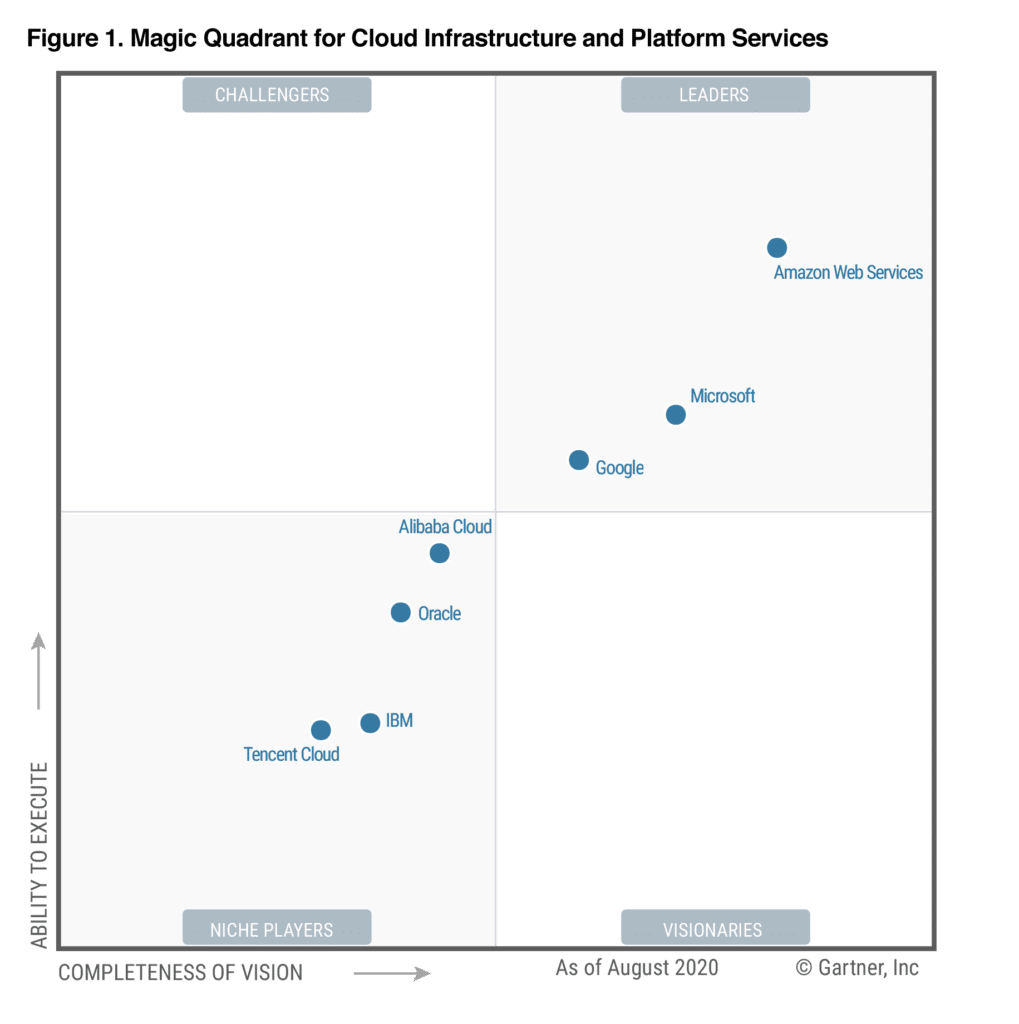
Google Deject and AWS Continue to Dominate the Industry
Google Cloud and AWS have dominated the deject calculating space since IaaS solutions began to gain traction in 2008.
In August 2020, a study from Gartner named both Google and Amazon in a group of 5 public cloud infrastructure providers that brand up 80% of the IaaS marketplace. A trend that is only set up to continue equally both organizations double down to consolidate their foothold in the market place.
Despite the global pandemic stalling major economies, Gartner is forecasting worldwide public cloud revenue growth in 2020 by 6.iii%. Driven by an explosion in remote working, we can reasonably expect comparative results in the deject space. Especially with the report outlining a 94% increase in the Desktop as a Service (DaaS) market. Confronting this backdrop, you tin wait Google and Amazon to go along expanding.
While they both started life in the IaaS space, y'all can at present turn to Google Deject and AWS for 100s of solutions across IaaS, SaaS, and PaaS. With both organizations continuing to innovate and add new cloud services offerings to their e'er-expanding roster.
Google Cloud Platform Acquirement in 2020
Alphabet's Q4 and Fiscal Year 2019 results showed the visitor continued to evangelize strong growth, with overall revenue up xviii% yr-on-year. While there is a lack of transparency in revenues contributed by Google Cloud, the company reported impressive growth in backlog of 100%, putting the visitor on an annual run rate of $x billion as of twelvemonth-stop.
In 2020, the arrival of the Coronavirus pandemic saw Google Cloud's parent visitor – Alphabet – record its first-ever quarterly acquirement decline since going public in 2004. Against this dire backdrop, Google Deject has in fact bucked the trend, seeming only to have accelerated growth.
In Q1, Google Cloud fabricated significant gains thank you to Google Meet, when their video conferencing tool became a striking for remote workers. Earning release statements for Q1, Q2, and Q3 show a pattern of connected YoY revenue growth for the Google Deject Platform. As we caput towards the finish of 2020, Google Cloud acquirement is projected to abound to an annual run charge per unit in excess of $xiii billion – a predicted 30% growth in 2019.
Amazon Web Services Revenue in 2020
In 2019, Amazon's Q4 Earnings Release reported AWS sales revenue of most $10 billion. Putting the organisation on an almanac revenue run rate in backlog of $xl billion.
With the emergence of the Coronavirus pandemic in 2020, AWS growth has slowed significantly. With Q1, Q2, and Q3 earnings release statements showing YoY growth failing and settling into a sub 30% growth rate in each corresponding quarter. This is a marked irksome downward from growth of 40-l% over the previous 3 years.
This is hardly a doom and gloom scenario, AWS is now on a $43 billion annual revenue run charge per unit with the figure expected to expand one time Q4 is complete. The exception might exist if you're an Amazon shareholder, particularly after Jeff Bezos told Amazon shareowners to "have a seat" while their COVID-19 response eats into operating profits.
Google Cloud vs Amazon Web Services Features Comparing
Information technology is no simple chore to compare the Google Cloud vs AWS platforms. Their sprawling and always-expanding cloud services now include 100s of products from which to choose from. Complicating matters further, the providers often use unlike naming conventions for comparative products. Then, to avoid getting lost in the detail, information technology requires a sure level of knowledge and understanding.
Simplifying the job, both the Google Deject Platform and Amazon Web Services Platform thankfully group their products under the aforementioned category headings. Accelerating the process to save you lot time, we've washed the heavy lifting of comparing the most commonly used services from business organisation-critical categories.
In this section, nosotros'll explore the products that combine to create a typical deject deployment – compute, networking, security, and storage. Here at Kinsta, we take the first-hand experience of utilizing these services in delivering market place-leading hosting solutions.
We too embrace the critical considerations that surround these services. Service support, platform stability, pricing, and billing structure.
Compute Features
When comparing Google Cloud vs Amazon Spider web Services compute capabilities, we'll exist focussing on virtual machines (VMs).
These figurer system emulations provide the functionality of a concrete computer and run almost any workload you can recollect of. They are the foundation of your cloud environment, information technology's critical you cull a VM setup that suits your concern needs.
Both cloud providers have adopted a like approach to VMs, though they use different naming conventions for their individual product offerings.
Compute Engine is the service offering on the Google Cloud Platform, while Amazon Web Services is named Amazon Elastic Compute Deject (Amazon EC2). Each provider also uses different terminology and concepts.
Thankfully, Google has mapped Amazon EC2'south terminology and concepts to that of Compute Engine – which yous tin can come across in the table below:
| Characteristic | Amazon EC2 | Compute Engine |
| Virtual machines | Instances | Instances |
| Automobile Images | Amazon Auto Image | Image |
| Temporary virtual machines | Spot instances | Preemptible VMs |
| Firewall | Security groups | Compute Engine firewall rules |
| Automatic instance scaling | Auto Scaling | Compute Engine autoscaler |
| Local attached disk | Ephemeral deejay | Local SSD |
| VM import | Supported formats: RAW, OVA, VMDK, and VHD | Supported formats: RAW, OVA, VMDK, and VHD |
| Deployment locality | Zonal | Zonal |
Mapping high-level terminology for Amazon EC2 to Google Compute Engine (Table Source: Google)
Virtual Machine Features
When deploying virtual machine instances on Compute Engine Amazon EC2, both services deliver many features that closely marshal, these include:
- The power to employ stored disk images to create instances
- On-demand capabilities to launch and terminate instances
- Brake free management of your instances
- The power to tag your instances
- A variety of bachelor operating systems that tin can exist installed on your case
Virtual Machine Admission
When it comes to accessing your VM, in that location are a number of key differences in the approach taken between Compute Engine and Amazon EC2.
If you desire concluding access to an example in Amazon EC2 yous'll need to include your own SSH key.
Compute Engine offers a more flexible approach to terminal admission. Allowing you to create an SSH key equally and when you lot need information technology, even if that example already running. You also won't need to store these keys on your local machine, thanks to Compute Engine'due south browser-based SSH terminal which is available via the Google Cloud Console.
Virtual Automobile Instance Types
When deploying your virtual machine, both Compute Engine and Amazon EC2 offer simplicity through a range of predefined instances. These instances incorporate specific configurations of virtual CPU, RAM, and network.
Both Google and Amazon offer 100s of virtual automobile types bachelor in a variety of configurations. Each offers flexibility, allowing you to customize your configurations in order to calibration your VM resources to meet the unique needs of your business organisation.
You can do this past increasing the number of CPUs and available RAM to extreme high-cease specifications.
The providers max out with the post-obit:
- Google Compute Engine VMs scaling upwards to 416 vCPUs and xi,776 GB of RAM
- Amazon EC2 VMs scaling up to 448 vCPUs and 24,576 GB of RAM
Across the range of VM types, both platforms employ largely the same categorization. Though in certain categories, one provider may offer a automobile type the other does non.
Depending on your business requirements, you tin can choose from machine types across categories including shared core, full general-purpose, retentiveness-optimized, compute-optimized, storage optimized, GPU, and high-performance categories.
To provide yous with the best VM comparison between Amazon EC2 and Compute Engine, we've compiled the following table which lists the most up-to-appointment machine types for both services.
| Machine Type | Amazon EC2 | Compute Engine |
| Shared Cadre | N/A | f1-micro – g1-small e2-micro – e2-medium |
| General Purpose | a1.medium – a1.metal t4g.nano – t4g.2xlarge t3.nano – t3.2xlarge t3a.nano – t3a.2xlarge t2.nano – t2.2xlarge m6g.medium – m6gd.metallic m5.large – m5d.metal m5a.large – m5ad.24xlarge m5n.big – m5dn.24xlarge m4.large – m4.16xlarge | e2-standard-2 – e2-standard-32 e2-highmem-2 – e2-highmem-16 e2-highcpu-2 – e1-highcpu-32 n1-standard-1 – n1-standard-96 n1-highmem-ii – n1-highmem-96 n1-highcpu-ii – n1-highcpu-96 n2-standard-ii – n2-standard-fourscore n2-highmem-2 – n2-highmem-eighty n2-highcpu-2 – n2-highcpu-eighty n2d-standard-2 – n2d-standard-224 n2d-highmem-2 – n2d-highmem-96 n2d-highcpu-2 – n2d-highcpu-224 |
| Memory-optimized | r6g.medium – r6gd.metal r5.large – r5d.metal r5a.big – r5ad.24xlarge r5n.big – r5dn.24xlarge r4.large – r4.16xlarge x1e.xlarge – x1e.32xlarge x1.16xlarge – x1.32xlarge u-6tb1.metallic -u24tb1.metal z1s.large – z1d.metal | m1-ultramem-twoscore – m1-ultramem-160 m1-megamem-96 m2-ultramem-208 – m2-ultramem-416 |
| Compute-optimized | c6g.medium – c6gd.metal c5.large – c5d.metal c5a.large – c5ad.24xlarge c5n.large – c5n.metallic c4.large – c4.8xlarge | c2-standard-four – c2-standard-60 |
| Storage-optimized | i3.large – i3.metal i3en.big – i3en.metal d2.xlarge – d2.8xlarge h1.2xlarge – h1.16xlarge | Northward/A |
| GPU | p4d.24xlarge p3.2xlarge – p3db.24xlarge p2.xlarge – p2.16xlarge inf1.xlarge – inf1.24xlarge g4dn.xlarge – g4dn.metal g3s.xlarge – g3.16xlarge f1.2xlarge – f1.16xlarge | NVIDIA® Tesla® T4 – NVIDIA® Tesla® K80 NVIDIA® Tesla® T4 Virtual Workstation – NVIDIA® Tesla® P100 Virtual Workstation |
| High performance | N/A | N/A |
| Custom VM resource configuration | Yes | Yeah |
Virtual Motorcar Images
To accelerate your virtual machine deployment you can use car images.
These are typically configured to include an operating organisation and the required supporting spider web server and database software. Both Compute Engine and Amazon EC2 use car images to create new instances. In addition to the standard configurations, they both allow yous to use images published by a third-party vendor or custom images created for private use.
The platforms are similar enough that you tin can utilise the aforementioned workflow for image creation on both Amazon EC2 and Compute Engine.
When it comes to paradigm storage, they take slightly different approaches. On Google Deject, images are stored with Compute Engine, while Amazon EC2 stores its images in different services – Amazon Simple Storage Service (S3) or Amazon Elastic Block Store (EBS).
The distinct benefit Amazon EC2 offers over Compute engine is the ability to admission a customs repository of gear up-made images and the power to make your own images publicly bachelor (should this be a requirement).
On the flip-side, Compute Engine offers the benefit of globally available automobile images. While Amazon Car images are geo-locked, meaning they are merely available in a specific region.
Automatic Instance Scaling of Virtual Machines
One of the most powerful cloud benefits is the power to scale your workload resource to run into demand. This goes both means, increasing resources in top periods to maintain operation and inversely reducing resources in quiet times to limit wastage and control spend. This process is widely known as autoscaling.
Both Compute Engine and Amazon EC2 back up and implement autoscaling similarly, allowing you to create and remove resources in line with user-defined policies.
Amazon EC2 auto-scales instances in a group, with each example created from a defined launch configuration. Instances are created or removed based on i of three called scaling plans
- Transmission – y'all manually instruct auto-scaling up or down
- Schedule – yous configure specific timeframes to auto-scale resources
- Dynamic – y'all create policies to calibration your instances based on Amazon CloudWatch metrics or Amazon Simple Queue Service (SQS) queues.
Compute Engine scales instances in a managed instance group. Each instance group is created from an instance template with resources scaled based on an autoscaling policy. Dissimilar Amazon EC2, Compute Engine's motorcar scaler only supports dynamic scaling.
Temporary Virtual Auto Instances
If you desire to tap the power of cloud computing, but only have a limited budget, information technology's worth exploring the option of temporary instances. Virtual machines that are running on spare cycles of resources allocated to other processes.
Temporary instances are available sporadically, then are all-time used on jobs that:
- can be interrupted without you losing piece of work
- don't need completing in a gear up timeframe, typically depression priority workloads
- don't demand higher computational power, such every bit rendering video
Both Amazon EC2 and Compute engine offer a version of temporary instances. Though they use dissimilar pricing models and naming conventions, they share a set of common attributes when their temporary VMs:
- are fully controllable while running
- run at the same performance levels as on-demand instances
- are restricted to a subset of machine types and machine images versus on-demand instances
Amazon EC2 temporary VMs are known as Spot Instances. They are bachelor in two formats:
- Undefined Spot Instances – y'all purchase a Spot Instance for an undefined flow of time, paying the cost that is in consequence for the period your instances are running. This type of instance tin exist available at a discounted price of up to 90% of standard on-demand pricing. You tin can bank check and compare electric current Spot prices versus On-Demand rates via the Spot Instance Counselor.
- Spot Instances for the predefined duration—you purchase a cake of time in advance. Available in hourly increments for up to half-dozen hours. With forrard planning, you only access discounts ranging from 30-l%.
Compute Engine temporary VMs are named Preemptible Virtual Machines. They are available longer than their Amazon EC2 counterparts, running for up to 24 hours (if not reclaimed) before being automatically terminated. Their pricing structure is fixed and is available at a discounted rate of upwards to 80% versus the on-need rates of equivalent VM instances.
Networking Features
Amazon Web Services and Google Cloud accept each developed a formidable global deject infrastructure. Their sprawling networks consist of 100s of interconnected data centers beyond the globe.
Each provider has adult a state-of-the-art cloud network designed for high error tolerance, endless redundancy scenarios, and low latency levels. Each offers networking services capable of delivering high-speed connectivity to VMs, other cloud services, and on-premises servers.
Inside this section we will take a closer look, comparing the networking products and services on offer from Google and Amazon.
| Product | Amazon Web Services | Google Deject Platform |
| CDN | Amazon CloudFront | Cloud CDN |
| Dedicated Interconnection | AWS Direct Connect | Cloud Interconnect |
| DNS | AWS Route 53 | Deject DNS |
| Load Balancing | Rubberband Load Balancing | Cloud Load Balancing |
| Virtual Networks | Amazon Virtual Private Cloud | Google Virtual Private Cloud |
| Tiers | Northward/A | Network Service Tiers |
Locations
Both providers proceed a rapid expansion of their respective infrastructure, with new information center locations in evolution or planned for the hereafter. When comparison the location numbers for network availability, it appears too close to call.
Google Cloud Network Locations
Google boasts deject network locations currently available across 29 regions, 73 zones, 144 network edge locations, and 200+ countries and territories. They recently added new locations in Seoul, Table salt Lake City, Las Vegas, and Djakarta.
The future will see Google Cloud continue to aggrandize into the following locations: Warsaw (Poland), Doha (Qatar), Toronto (Canada), Paris (French republic), Milan (Italy), Santiago (Chile), and Madrid (Spain).

Amazon Web Services Network Locations
AWS at present offers deject network locations available in 24 regions, 77 zones, 210 network edge locations, and 245 countries and territories. While the figures announced also close to phone call, Amazon'south network is bigger, offering multiple availability zones in twice as many regions equally Google. Which would give them an border when it comes to latency.
Coming soon, Amazon plans to launch boosted data centers in Hyderabad (India), Jakarta (Indonesia), Osaka (Japan), Madrid (Spain), and Zurich (Switzerland).

Content Delivery Network (CDN)
AWS and Google Deject each offer a Content Commitment Network (CDN) product. Both unlock the ability to deliver your content and services to end-users faster, by replicating and hosting it beyond their global infrastructure to allow for more localized access. This ways quicker load times, reduced strain on bandwidth, and greater responsiveness beyond your applications, websites, and services.
Named Amazon CloudFront and Deject CDN, they each offering enhanced security to defend against the virtually oft occurring network and transport layer DDoS attacks by default. They also offer deep integration with their respective platforms allowing you to unlock additional tools to monitor and improve performance.
Load Balancing
Both Google Cloud and AWS offering load balancing services. Configured accordingly, they will aid you to automatically distribute traffic across multiple instances for improved availability and fault tolerance of your applications. They offering these services in differing configurations which we will at present look at more closely.
AWS Load Balancing
The load balancing service from AWS is chosen Elastic Load Balancing (ELB). Information technology has the post-obit characteristics and capabilities:
- You can use AWS load balancing services both internally and externally.
- It lets yous direct traffic to instances in one or several availability zones in a specified region.
- Regular wellness checks are carried out on target instances, when an instance becomes unhealthy, traffic is redirected.
- ELB tin can be integrated with the AWS Auto Scaling Service, this allows the automatic addition and removal of the instance when Auto Scaling scales the up or downward
- An Awarding Load Balancer is available for content-based routing and SSL
- A Network Load Balancer is available for high throughput, low latency, Layer iv connections.
Check out the Elastic Load Balancing comparing department for a more detailed feature comparison.
Google Cloud Load Balancing
Googles' load balancing service is aptly named Deject Load Balancing. Information technology offers differing characteristics and capabilities:
- Google Cloud load balancing services are separated between internal and external access.
- Unlike ELB, you're given a unmarried IP address, accessible globally, when any external Compute Engine load balancer is provisioned. This IP accost is used for the lifetime of the load balance and so tin be used for DNS records, allowlists, and configuration in apps.
The different types of Compute Engine of load balancers include:
- Network load balancing – designed for external Layer 4 load balancing, it supports UDP and TCP traffic balancing across multiple ports or port ranges.
- HTTP(S) load balancing with TCP and SSL proxy – designed for external Layer 7 load balancing, traffic is counterbalanced through various global and regional protocols. With traffic automatically redirected to the nearest backend, based on available capacity.
- Internal TCP/UDP load balancing – software-divers regional load balancing which redirects traffic from your instance to a backend case.
- Internal HTTP(S) load balancing – delivering proxy-based load balancing of Layer 7 application data, with advanced traffic management and TLS termination.
Individual Connectivity to Other Networks
If you want to create a private connection to instances outside your deject setup deject, like your on-bounds environs, both AWS and Google Cloud offer services for multiple requirements:
Virtual Private Network (VPN)
The corresponding offerings of Cloud Router and Amazon VPC allow y'all to create a private gateway between their cloud and your networks
Private Connectivity to a VPC
When a VPN doesn't provide the speed you need for sure workloads, a dedicated resource is required. Both providers offer private connectivity services with a network line offering a dedicated capacity level:
- AWS lets you create a privately leased line with an AWS partner through its Direct Connect service. Admission a 1-10 Gbps connexion offering you lot connexion speeds from 50 Mbps.
- Google lets you create straight physical connectivity to your Google VPC from a partner facility with 10 Gbps increments through its Defended Interconnect service. Similar AWS, Partner Interconnect delivers connection speeds from 50 Mbps.
Loftier-Speed Connectivity to Other Cloud Services
Both providers offering high-speed connectivity for access to cloud services exterior your VPC.
AWS's Direct Connect service creates a carve up virtual interface through which you can access all AWS deject services.
Google Cloud has a wider range of services:
- Straight Peering – lets you access all Google cloud services through a private network line to whatsoever of Google's Edge Points of Presence.
- Carrier Peering – offers the same interconnectivity services, only the connexion is leased from a Google Partner.
- Private Google Admission for on-premises hosts – delivers individual admission through Dedicated Interconnect or Partner Interconnect.
Content Commitment Network Connectivity
Both providers offering discounted egress rates from your cloud resources to a CDN provider. Amazon provides these rates for its ain CDN service but, Amazon CloudFront. Google offers CDN Interconnect, which provides discounted egress rates through several CDN providers.
DNS
Both providers evangelize managed DNS services through their respective Amazon Route 53 and Cloud DNS offerings. Each supporting most all DNS record types, anycast-based serving, and domain name registration.
Where they differ, Amazon Route 53 supports two routing options, where Cloud DNS does not. Geography-based routing, allowing y'all to restrict content to geographic locations. And latency-based routing, which directs traffic based on latency levels measured past the DNS services.
The tabular array below outlines a list of features mapped across both services:
| Feature | Amazon Route 53 | Cloud DNS |
| Zone | Hosted Zone | Managed Zone |
| Back up for nigh DNS record types | Yes | Yes |
| Any-cast-based serving | Yes | Yes |
| Latency-based routing | Yes | No |
| Geography-based routing | Yeah | No |
| DNSSEC for DNS Service | No | Yes |
| Individual Zones / Split Horizon | Yes | Yes |
Network Service Tiers
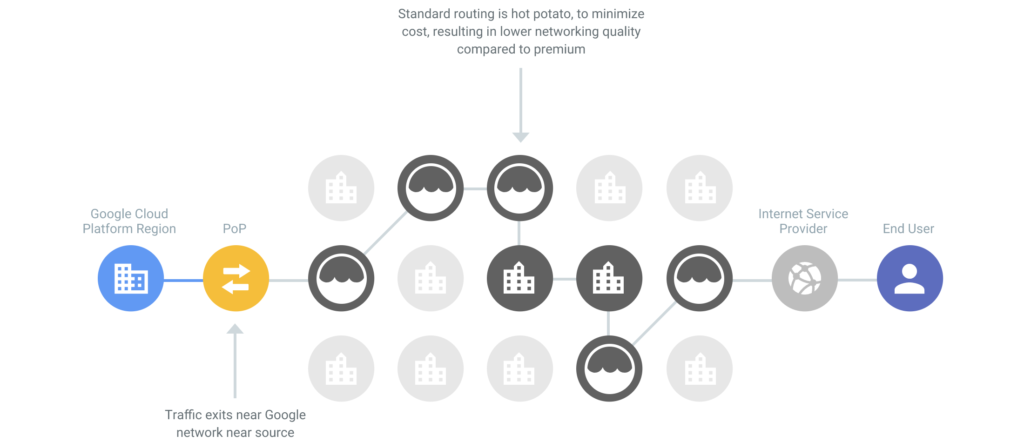
To appointment, the Google Cloud Platform is the merely provider to offer network service tiers to its customers. Selecting between a Standard and Premium tier, yous have the flexibility to optimize your network based on performance and price.
Premium Tier
Choosing the Premium tier unlocks Google's high performance and low latency network. Your traffic is prioritized, being routed through the fewest hops via the fastest paths to advance ship speeds and increase security. You lot also gain access to global network load balancing, while beingness protected by a Global SLA.

Standard Tier
Choosing the Standard tier connects you to Google'south lower operation network, still highly competitive with other public cloud services. Your load balancing services remain regional and you are non protected past a Global SLA. This pick is for those where price outweighs performance considerations.
Storage Features
There are five different types of storage services available from the Amazon and Google Cloud platforms. Understanding the dissimilar storage and deejay types utilized is important, every bit they will take a direct influence on your performance.
Distributed Object Storage
Distributed object storage is a method of storing data as objects, likewise known as blobs. It allows you lot to store, protect, and access large volumes of data for use across a broad range of scenarios including websites, mobile apps, backups, archiving, and big data analytics.
Amazon Simple Storage Service (S3) and Google Cloud Storage are the competing distributed object storage services. They each role similarly, allowing you to store objects in a bucket. Each bucket tin can be identified with a unique cardinal, and each object has an associated metadata record containing information including object size, date of last modification, and media type.
Both providers too a similar feature set for their services including:
- The ability to host static media and web content
- Object Versioning – where an object tin exist stored equally multiple distinct versions to prevent data loss through objects being accidentally overwritten
- Object Lifecycle management – allowing you lot to automate the migration and deletion of objects through preset user-specified lifecycle policies
- Update Notifications – which can exist configured to issue notifications whenever objects are created, updated, or deleted. Google Cloud Storage offers a more granular approach to notification types.
- Service Level Agreement (SLA) – both Amazon S3 and Cloud Storage provide SLA uptime guarantees with a tiered refund amount once uptime drops below 99.95%.
Beneath is a table outlining a more detailed comparison of terminology and features:
| Feature | Amazon S3 | Cloud Storage |
| Unit of Deployment | Bucket | Saucepan |
| Deployment identifier | Globally unique fundamental | Globally unique key |
| File arrangement emulation | Limited | Limited |
| Object metadata | Yeah | Yes |
| Object versioning | Yes | Yes |
| Object lifecycle management | Yes | Yep |
| Update notifications | Issue notifications | Pub/Sub Notifications for Cloud Storage, Deject Storage triggers for Cloud Functions, and object change notifications |
| Service classes | Standard, Standard-Infrequent Access, One Zone-Infrequent Admission, Amazon Glacier | Standard, Nearline, Coldline, Archive |
| Deployment locality | Regional | Multi-regional and regional |
| Pricing | Priced by the amount of information stored per month, network egress, and number of common API requests | Priced by the corporeality of data stored per month, network egress, and number of mutual API requests |
Block Storage
Block storage is the process of calculation a virtual disk to a cloud-based virtual machine.
Both providers offer block storage services that integrate with their respective VM compute services, offering multiple cake storage types that can be configured to varying performance and pricing levels.
Google provides Persistent Disk in combination with Compute Engine for its block storage service. While Amazon provides Elastic Block Shop (EBS) in conjunction with Amazon EC2. Each offers you the ability to attach disks in ii different ways:
Network-Attached Disks
A network-attached disk is where a disk volume is connected to your VM instance via the cloud provider's network. This brings the inherent cloud benefits of built-in redundancy, snapshotting, and ease of disengagement and reattachment of disk volumes.
Let's take a high-level look at the characteristic comparisons betwixt Google and Amazon block storage services:
| Characteristic | Amazon EBS | Google Persistent Disks |
| Volume types | EBS Provisioned IOPS SSD, EBS General Purpose SSD, Throughput Optimized HDD, Cold HDD | Zonal standard persistent disks (HDD), regional persistent disks, zonal SSD persistent disks, regional SSD persistent disks |
| Volume locality rules | Must be in aforementioned zone as instance to which it is attached | Must be in same zone as instance to which it is attached |
| Book attachment | A unmarried volume to be attached to up to sixteen instances – each with read-write permissions to the shared volume | A unmarried volume can be fastened to upwards to 10 instances in read-only mode |
| Attached volumes per instance | Up to 40 | Up to 128 |
| Maximum book size | 16 TiB | 64 TB |
| Back-up | Zonal | Zonal or multi-zonal depending on volume type |
| Snapshotting | Yeah | Yes |
| Snapshot locality | Regional | Global |
There are some distinct feature differences that require a closer inspection:
Volume Attachment and Disengagement
Once you create a disk book, you can attach information technology to a single Compute Engine or Amazon EC2 instance. This instance tin then mount and format the disk volume. You tin can also choose to unmount and detach this disk volume, which can then be reattached to a dissever instance.
Until recently, Google had a significant edge offer the capacity for a unmarried volume to be fastened to multiple instances in read-only mode. This changed with Amazon's introduction of EBS Multi-Attach, allowing a unmarried volume to be attached to up to 16 AWS Nitro-based instances inside the same availability zone. With each case having read-write permissions to the shared volume.
Subscribe At present
Volume Snapshotting
Google Persistent Disk and Amazon EBS allow you to create and shop snapshots of your disk volume. Allowing you to create new volumes at a later appointment using the snapshot.
The process of creating snapshots is similar across the services. Initially creating a full re-create of the book, with future snapshots only copying changes from the previous book.
It'south their availability that differs. Google Snapshots benefit from beingness available globally and can be used in any region without additional charges or requirements. Amazon EBS snapshots are dissimilar, only available in one region past default. You must expressly re-create and incur data transfer charges if yous wish to make a snapshot with AWS available in another region.
Locally Attached Disks
A locally attached disk is directly connected to the physical machine running your example. This straight connection offers the benefits of reduced latency and higher throughput of increased performance.
Let's take a closer look at how locally-attach disks in Compute Engine and Amazon EC2 compare for features in their respective block storage services:
| Block Storage | Amazon EC2 | Google Persistent Disks |
| Service name | Case store | Local SSD |
| Volume attachment | Tied to instance blazon | Can be attached to any non-shared-core instance |
| Device type | Varies past case type – HDD, SSD, etc. | SSD |
| Attached volumes per instance | Varies by instance blazon – up to 24 | 24 |
| Storage capacity | Varies by case type – up to 2500 GB per volume | 356 GB per volume |
| Live migration | No | Yes |
| Redundancy | None | None |
File Storage
If you need file storage as function of your cloud setup, there are services on offer from both AWS and Google Cloud. They're respectively named Amazon Elastic File System (EFS) and Google Filestore, the latter a new edition emerging from beta testing in late 2018.
Both offer a fully managed service, where you can apace create and configure file systems, while the underlying infrastructure and associated deployment, patching, and maintenance are handled past your provider. Security of data is ensured through encryption at residue and in transit, with the capability to scale your instances to meet changes in performance requirements.
A large difference betwixt the two providers, Amazon EFS runs on the newer Network File System Protocol, NFSv4. While Google's Filestore service utilizes the older NFSv3 protocol. While studies have shown NFSv4 provides significant functioning enhancements over NFSv3, the throughput and IOPS performance specs from both providers are strikingly like.
Amazon EFS offers performance capabilities upwards to 10 GB/sec and over 500,000 IOPS, while Filestore is said to max out at 16 GB/sec and 480,000 IOPS. In layman'due south terms, both volition offering you a storage infrastructure capable of treatment your highest performance workloads with depression latency.
Cool Storage
If y'all're planning on storing data that is accessed infrequently, without the need for immediate availability, you should consider cool storage.
Both Amazon S3 and Deject Storage provide a reduced-cost storage class for this type of data. Amazon S3 offers exceptional storage classes Standard-IA and One Zone-IA. While Cloud Storage offers exceptional classes of Nearline and Coldline.
Cold or Archival Data Storage
If you're planning on storing data for archival purposes, that doesn't crave regular or quick retrieval, both Amazon and Google offer an additional common cold storage class for this data blazon. They are known equally Amazon Glacier and Google Archival Cloud Storage.
Both are price-effective storage options for the long-term preservation of data that is perhaps accessed less than one time a twelvemonth.
Security Features
Security volition be chief amidst your considerations when exploring a cloud provider. When comparing cloud security, you want to explore and focus on the controls, policies, processes, and technologies that will combine to protect your deject-based information, systems, and infrastructure.
Both Amazon Web Services and Google Cloud are renowned for offer cutting-edge cloud security. Committed to continually advancing research and development of their platforms to remain resistant to an ever-evolving threat landscape.
Taking a loftier-level arroyo, both providers deliver deject security in 3 ways:
- Security of their cloud – delivering you protection past default through security capabilities built into the underlying infrastructure of their deject platform
- Security in the cloud – allowing you to enhance the protection of your applications and data through additional security products and services available within their cloud platform
- Security anywhere – protecting your assets regardless of location, by expanding security capabilities beyond their cloud platform with protocols similar encryption
Delving beneath the service, let's explore the main considerations when comparing Google Deject Security vs AWS Security.
Compliance
Data protection and compliance are an ever-ascension tide of regulatory control practical to information by governments and industry alike. Compliance has to be considered when choosing your cloud platform.
Both the AWS and Google Deject platforms run across some of the toughest compliance requirements including CSA STAR, GDPR, HIPPA, PCI-DSS, and a range of ISO standards.
Both providers offer compliance programs that embrace certifications, law, regulations, frameworks, and privacy with a distinct crossover.
Amazon's cloud platform and AWS compliance programs see 75 compliance standards. Google Cloud's compliance offerings as well deliver against 75 compliance standards. Making both providers a viable option, even if you're working in a heavily regulated sector like healthcare or financial services.
Standing to steal headlines in the realm of compliance is GDPR. Rest assured both AWS and Google Deject platforms are GDPR compliant, each offer a resource center. Helping y'all meet the protection, processing, and privacy requirements of any information you hold of a European denizen.
Encryption
Encryption plays a disquisitional function in protecting your information. The practice of encoding information – making it near impossible to decipher without a decryption key – should be implemented regardless of where your information is held. Ensuring your data is safety even if it's intercepted in-transit or at rest
Both Google Cloud and AWS offer encryption past default for data-in-transit and at-rest using 256-bit AES. Each offers you lot a range of options to protect data using either server-side or client-side encryption.
Google Cloud Key Management and AWS Cardinal Management Service (KMS) are the competing encryption services on offer. Each offers you the capability to easily create and manage the keys used to encrypt and digitally sign your data.
Firewalls
Acting as the start line of defense for your IT infrastructure, a firewall is responsible for protecting your network from unwanted intrusion. Both Google Cloud and Amazon deliver state-of-the-art firewall protection of their cloud platforms.
In addition to this, both providers offer firewall-as-a-service products to enhance protection if y'all operate a Virtual Private Cloud (VPC), defend against DDoS attacks, and centralize the direction of your firewall setup.
AWS Network Firewall and Google Cloud Firewalls are the competitive services that allow you lot to deploy network security access beyond your VPCs in just a few clicks. If you're later protection confronting DDoS attacks, you can choose between similarly named services of AWS Shield or Google Cloud Armor.
When it comes to the fundamental configuration and management of firewall rules across your cloud-hosted accounts and applications, Amazon offers this every bit a separate service named AWS Firewall Manager. Features and functionality that Google includes as part of its cadre Cloud Firewall service.
Identity Access Direction (IAM)
Decision-making who has admission to what plays a critical function in system security, this is widely known as Identity Access Management. It'south the offset step in preventing unwanted visitors from gaining access to sensitive information.
Both Google Cloud and AWS deliver Identity Access Management services within their deject platform. Giving you granular control over who has access to your applications, what information they tin access, and what they can practice to your data.
Below are the core competing IAM services on offer:
Identity and Admission Management Console
This is the centralized IAM service giving you complete visibility and control to manage your cloud resources. Giving administrators the power to control who can take activeness on specific resources.
- AWS – AWS Identity and Admission Management (IAM)
- Google Cloud – Deject Identity and Access Management (IAM)
Managed Services for Microsoft Active Directory
If y'all already implement IAM using Microsoft'southward Active directory and program to continue doing so in the cloud, both cloud providers offer you a hardened service for running Microsoft AD.
- AWS – AWS Directory Service
- Google Cloud – Managed Service for Microsoft Active Directory
Single Sign-On
Centrally manage and command user access to multiple accounts and applications both on-premises and in the cloud through single sign-on admission. Helping yous deliver improved productivity and UX of employees through the ease of access.
- AWS – AWS Single Sign-On
- Google Deject – Single sign-on (SSO)
Mobile and Spider web Application Control
Take advantage of a cloud-based IAM service letting you add user sign-up, sign-in, and access command to your mobile and web apps.
- AWS – Amazon Cognito
- Google Cloud – Identity Platform
Shared Responsibility
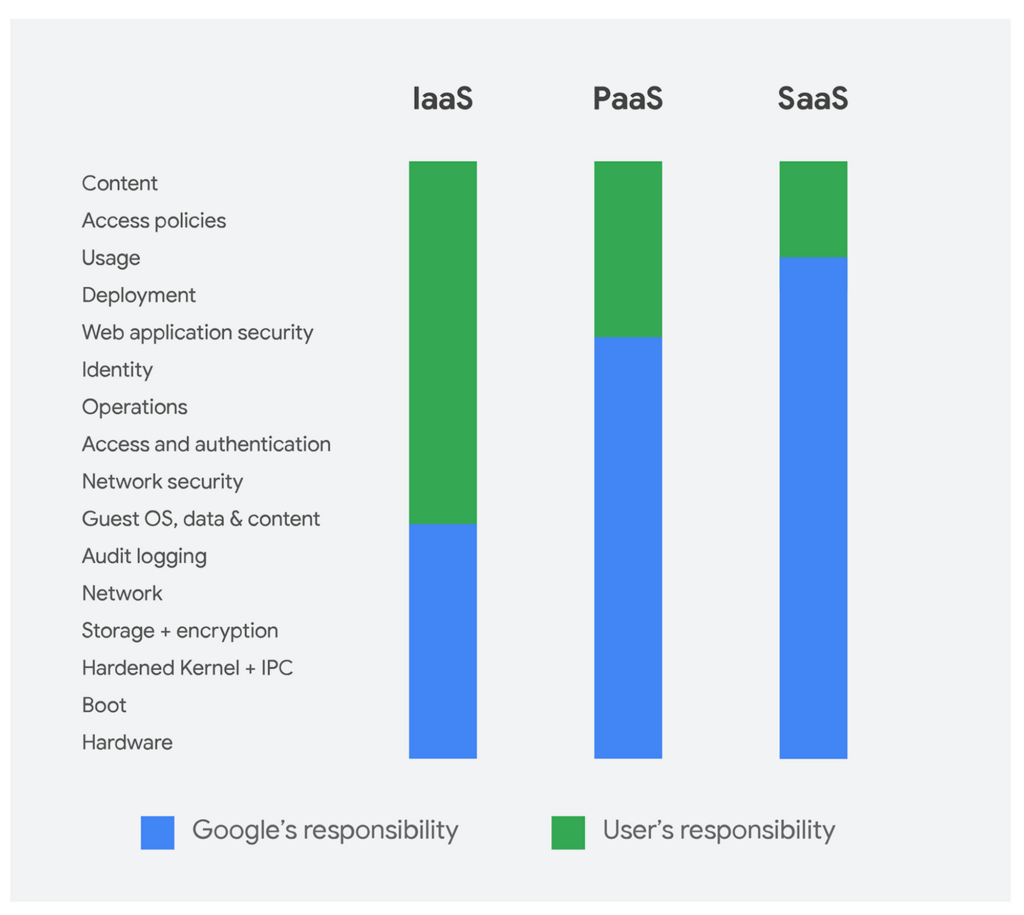
Implementing security and compliance in the deject is a shared responsibleness.
It's vital y'all sympathise the divide between who is responsible for what when it comes to implementing a robust cloud security opinion. A misunderstanding here will create security vulnerabilities that are easily avoidable.
Amazon Spider web Services and Google Deject Platform provide comprehensive guidance on their shared responsibility models for cloud security. Beneath is a loftier-level graphical depiction of each.
AWS Shared Responsibility Model

Google Deject Shared Responsibleness Model
Back up
Deploying a new deject service, yous are going to come across instances where you lack the prerequisite cognition or expertise to achieve a job. In these situations, you want a cloud provider who has the additional guidance and back up you need to overcome such obstacles.
Both AWS and Google Cloud are renowned for their all-encompassing libraries of technical documentation. As well as their own thriving cloud communities, packed with 1000s of deject experts who are always willing to share their cognition.
Here you lot can browse a wealth of topics spanning tutorials, discussions, and even in-person meetups. Below you can detect links to corresponding documentation and community support portals:
- AWS Documentation
- Google Deject Documentation
- AWS Word Forums
- Google Cloud Customs Support
You can resolve almost of the bug you encounter with back up from the sources in a higher place. Somewhen, you lot will run into a situation where immediate, avant-garde expertise, and easily-on support are required. In this situation, it's sensible to have an official back up solution in place, straight from your cloud provider or an authorized third-party partner.
As office of their back up model, both AWS and Google Cloud offering bones support. Alongside a range of boosted paid premium plans. If yous're considering a premium program, inquiry and understand what's included. This involves the associated fees, to ensure yous pick a plan yous demand with a price yous can beget.
Google Cloud Support Plans
Google Cloud has 4 available support plans, which split into ii types – part-based support and premium support.
Role-based support is divided into three tiers – Basic, Evolution, Product:
- Prices range from complimentary to $250/month per user.
- Each boosted tier increase provides more support types, accelerated response times, more advice channels, greater availability, and escalation choices for more immediate bug.
- Development and Production support plans tin be combined for maximum coverage.
Premium support is the highest level programme available:
- Prices can be upwards of $150k/twelvemonth with an additional 4% of GCP and/or Google Workspace spend
- You'll receive guaranteed support response times inside 15-minutes, 24/7 support for critical-touch on issues, a Technical Account Manager, intelligent support systems, and even training.
- The program is fully customizable, allowing you to tailor support across the products and services most of import to your system.
AWS Cloud Support Plans
AWS too has 4 available back up plans, which are split between complimentary and premium.
Premium support is divided into 3 tiers – Programmer, Business concern, and Enterprise:
- Prices start from $29/month + 3% of AWS usage and scale up of $1200/month based on a percent of monthly AWS usage which declines the more y'all spend
- Each boosted tier levels up your support with best practice checks, boosted communication channels, 24/7 availability, event response times within 15 minutes for business-critical system outages, a back up API, a Technical Account Manager, and training resource.
- College-level plans are also customizable, allowing y'all to choice and cull the products and services for which you lot desire premium back up.
Hither at Kinsta, we understand the importance and need for expert support in times of need. That'south why the entire Kinsta support team is fabricated upwards of expert WordPress and Linux engineers. Whether yous're an SME or Fortune 500 company, y'all'll get the same level of dedicated premium back up.
Billing and Pricing
Without a doubt, accurate pricing comparisons between cloud providers is one of the most challenging aspects of the conclusion procedure. Each provider has a unique billing and pricing methodology with endless variables and moving parts.
To help y'all better understand the claiming of deject provider pricing comparisons, below are just a few variables that will influence pricing upward your desired cloud deployment:
- Virtual Machines – number of instances, Ram requirements, number of CPUs, reserved or temporary instances
- Storage Disks – storage corporeality required, information types, redundancy requirements, network-fastened or locally-fastened
- Subscription model – whether yous're purchasing by the 2d, minute, hour, day, month, or year
- Support – which tier you opt for, whether you customize your support, your average monthly deject spend
- Payment model – whether you lot're selecting a pay-equally-you-go service, reserved instance, or long-term committed use contract
- Location – data center location too influences pricing
The larger your cloud deployment, the greater the complication. Peculiarly when factoring in the different technology types between cloud providers. Take VMs for case, the differing technology may make information technology impossible for a like-for-like comparison for RAM and CPU requirements.
Fright not, we've got some tools, information, and guidance to aid y'all become started in creating your own personalized Google Cloud vs AWS pricing comparison.
AWS vs Google Cloud Pricing Comparison
At that place are literally 100s of different products available from Google Deject and AWS. Each with its own sub-ready of services, technologies, and pricing models. The options available mean deployment combinations tin can easily tick over into the 1000s. Information technology's unsurprising many are overwhelmed, fifty-fifty exploring storage and compute combinations for the nearly basic deployment.
Deject Pricing Calculators
Thankfully, both providers each have their own comprehensive pricing calculator. Information technology contains every product and service, specifications, and associated costs. This is your first pace in creating a comparable pricing judge.
- AWS Pricing Calculator
- Google Cloud Pricing Calculator
For the purpose of this pricing comparison, we'll explore VM compute costs from Amazon EC2 and Google Compute Engine. We've chosen this comparing option every bit, according to Gartner, 2-thirds of total cloud spend is typically on compute resources. Besides, in most instances, compute resource will form the foundation of your cloud deployment. So, without further delay, permit's take a deep-swoop.
Assumptions for Deject Pricing Comparison
In order to create an accurate comparison, we'll select the same region, CPUs, and operating organization for our compute setup:
- Region: Northern Virginia – US Due east
- Operating Organisation: Linux
- vCPUs/Cores: 4
We've then selected VM instances with comparable RAM specifications beyond the different machine types:
- Full general Purpose
- Compute Optimized
- Retentiveness-Optimized
- GPU instances/VMs
Feel gratuitous to play with your options, every bit y'all'll find switching betwixt unlike variables of case types, region, operating arrangement, and CPUs tin significantly alter your price per 60 minutes.
Below is a table outlining the chosen instances for comparison:
| Example Type | Amazon EC2 | EC2 RAM(GiB) | Compute Engine | Google RAM (GiB) |
| Full general Purpose | t4g.xlarge | 16 | n1-standard-4 | 15 |
| Compute Optimized | c6g.xlarge | 8 | c2-standard-four | 16 |
| Retentivity-Optimized | r6g.xlarge | 32 | n2-highmem-iv | 32 |
| GPU | g4dn.xlarge | 16 | NVIDIA® Tesla® T4 | 64 |
Pay-As-You lot Go
AWS and Google Deject offer an on-demand pay-as-you-become pricing model. This is best suited to individuals expecting intermittent cloud usage, equally it allows you a flexible approach to add and remove services when you lot need them. Of form, this level of flexibility comes at a toll, making the pay-equally-you-become model the most expensive per hour.
| Instance Type | Amazon EC2 | EC2 Price (per hour) | Compute Engine | Google Price (per hour) |
| General Purpose | t4g.xlarge | $0.134 | n1-standard-four | $0.150 |
| Compute Optimized | c6g.xlarge | $0.136 | c2-standard-4 | $0.188 |
| Memory Optimized | r6g.xlarge | $0.201 | n2-highmem-iv | $0.295 |
| GPU | g4dn.xlarge | $0.526 | NVIDIA® Tesla® T4 | $1.xl |
Table showing pay-as-you-go hourly rates of Amazon EC2 vs Compute Engine
Equally yous can see from the table higher up, Amazon EC2 offers a significantly lower price per hour across the different example types versus Google's Compute Engine. This fact is increasingly impressive when you consider Compute Engine's price per hour factors in a Sustained Usage Discount. This discount type is practical when usage in a month is to a higher place a certain threshold, offering savings starting at 15% and scaling up to 60%.
If you're only seeking out compute resources for short intermittent periods information technology's worth exploring temporary instances.
Referred to as Spot Instances by Amazon and Preemptible Virtual Machines past Google, you can unlock significant pay-every bit-you-go cost savings upwardly to 90% of on-demand pricing above by tapping into the cloud providers' spare compute resources.
As long every bit your happy for workloads to be interrupted if the resources is suddenly needed elsewhere.
Long Term Commitment Plans
If you're planning for the long term—and can make a long-term upfront delivery to your cloud deployment – yous will unlock significant savings versus a pay-equally-you lot-go model.
Amazon and Google both offer a long-term pricing model with upfront commitment options of 1 or 3 years. Google named its plans Committed Use, while Amazon uses the term Reserved Instances. Both offer a significant disbelieve over on-need pricing. Upward to seventy% on Compute Engine and up to 72% on Amazon EC2.
Over again, play with the variables to meet your needs – region, example type, CPUs, operating organization – equally information technology volition all influence your price per hour. With Amazon EC2, you'll also find yous tin can influence the disbelieve amount based on when and how you pay.
There is as well the option to choose convertible instance types, allowing yous to switch to a newer VM if it becomes available.
Non-convertible instances, with the full amount paid upfront, offer the greatest level of discount. For the purpose of this comparing over a 1 and 3-twelvemonth commitment, we've used these options.
1-Year Commitment
As you lot will see from the tabular array below, again Amazon EC2 is cheaper across the board for a 1-year committed instance versus Compute Engine.
| Instance Type | Amazon EC2 | EC2 Toll (per hour) | Compute Engine | Google Toll (per hour) |
| Full general Purpose | t4g.xlarge | $0.079 | n1-standard-four | $0.125 |
| Compute Optimized | c6g.xlarge | $0.080 | c2-standard-iv | $0.141 |
| Memory Optimized | r6g.xlarge | $0.118 | n2-highmem-iv | $0.177 |
| GPU | g4dn.xlarge | $0.309 | NVIDIA® Tesla® T4 | $0.880 |
Table showing hourly rates for a 1-twelvemonth commitment to Amazon EC2 vs Compute Engine
Amazon EC2 is upwardly to twoscore% cheaper beyond the board for a 1-year committed instance versus Compute Engine.
The price gap widens with Amazon offer a greater discount of forty% confronting pay-equally-you-go models for all example types, as a advantage for delivery. Whereas Google's disbelieve reward for your loyalty simply amounts to 15-twenty%.
It's of import to note, by switching to no upfront payment and the convertible instance choice on Amazon EC2 your disbelieve amount drops beneath 30% and narrows the price difference somewhat.
3-Year Commitment
Looking at the tabular array below, we're experiencing déjà vu, with Amazon EC2 continuing to be cheaper across the board when making a three-year delivery versus compute engine.
| Example Type | Amazon EC2 | EC2 Price (per hour) | Compute Engine | Google Price (per hour) |
| General Purpose | t4g.xlarge | $0.050 | n1-standard-4 | $0.046 |
| Compute Optimized | c6g.xlarge | $0.051 | c2-standard-4 | $0.094 |
| Memory Optimized | r6g.xlarge | $0.075 | n2-highmem-4 | $0.126 |
| GPU | g4dn.xlarge | $0.198 | NVIDIA® Tesla® T4 | $0.640 |
Tabular array showing hourly rates for a three-year delivery to Amazon EC2 vs Compute Engine
Notwithstanding, we have an exception in the General Purpose category, Compute Engine bucks the trend and is cheaper nether a 3-year delivery.
Otherwise, the cost gap remains around 40% for Compute Optimized and Memory Optimized options over a 3-year delivery. For GPU comparison, it actually widens to around 60%, a massive saving.
Once again, I should note, switching to no upfront payment and the convertible instance option on Amazon EC2 volition have a more than pronounced reduction on your discount amount. This reflects the increased risk of keeping VM instances over 3 years.
Cloud computing evolves fast, being tied in will forestall you from tapping into newer, faster, and more efficient VM instances.
Free Trials
If you're not ready to make the switch to a cloud service, both AWS and Google Cloud offer the option of a free tier across a wide range of their products. Giving y'all a predefined resource amount over a set amount of time, perfect if you're looking to trial a service.
Both providers likewise offer 'always complimentary' deject services, which are ideal if y'all take very low usage requirements and don't heed operations being interrupted. Let's have a closer look.
AWS Free Tier
Exploring the AWS Free Tier, you'll unlock free access to a range of 85 cloud products and services.
The AWS Gratis Tier has three different types:
- E'er free – a free offer that never expires and is available to all AWS customers
- 12 months free – available gratis over the outset 12-months from your initial sign-upwardly to AWS
- Trials – free for a shirt-term following the activation of a detail service
Yous'll be able to explore a wide range of products across compute, storage, database, IoT, AI, and many more.
If you're starting out then information technology's worth considering the compute and storage options which are gratuitous for 12-months later on signing up:
- Compute – Amazon EC2 admission for 750 hours a month with a t2. or t3. micro instance
- Storage – Amazon S3 standard storage of 5GB per month with 2,000 put 20,000 go requests
Google Cloud Gratis Tier
Exploring the GCP Free Tier appears a little more restrictive than the AWS culling. Though you lot'll still become admission to 24 cloud products and services. Which unlike AWS, remain under and always free offer, within monthly usage limits of course.
In add-on to AWS'due south free offerings, new Google Cloud customers will unlock $300 of free credit which can be spent on ANY of the Google Deject products and services.
Although your options are more limited, you tin still explore an exciting array of products across IoT, AI, storage, database, and compute that volition largely cover the nigh commonly desired cloud services.
Much similar with AWS, if yous're starting out, trial the compute and storage options which remain always free on the GCP:
- Compute – Compute Engine access to an F1-micro case with 30GB HDD per month and a 5GB snapshot
- Search – Deject Storage availability of 5GB for standard storage with 5,000 put and 50,000 get requests
When it comes to comparing the costless tiers, information technology'due south clear GCP has an edge over the AWS platform. Like for like, they will provide you with much wider admission to trialing their different products and services. Ideal if you're not yet fix to make a delivery to a cloud deployment.
Is Google Cloud Cheaper than AWS?
When it comes to cloud compute resources, which class the courage of near cloud deployments and spend, the answer is no. AWS is definitely cheaper than the Google Cloud Platform for VM instances.
All the same, the answer becomes a lot more "cloudy" when you motion away from unproblematic compute resource. Afterwards researching multiple products, services, and pricing models there is no clear winner in the price war.
You lot'll need to find your own reply to this question, and it will hinge entirely on the unique requirements of your business. Which data center location you chose, your networking requirements, the type of workloads you're running, seasonality. The list is never-ending.
I affair is for sure, there are deals to be had, and the opportunity for Google Cloud to be cheaper than AWS certainly exists. It only depends on your setup and the services required.
To add Azure to the mix, check out our cloud computing comparison of AWS vs Azure.
Summary
Our goal of researching these cloud providers is in seeking the definitive respond to which is the better cloud platform, Google Cloud vs Amazon Web Services?
On our journey, it'southward clear Google Cloud and AWS are market leaders. Both platforms offering an extensive range of cloud products and services at the cutting edge of technological advancement. Giving you pregnant benefits over an on-bounds deployment when it comes to scalability, functioning, security, and cost. Whoever you chose, you'll unlock a premium service at a competitive price.
At Kinsta, we apply the GCP platform to evangelize top-tier functioning within our web hosting solutions. The premium tier network service offers pregnant performance enhancements in reducing latency and minimizing downtime.
In terms of progression, it'south articulate that Google Deject is making pregnant improvements to the platform. This year has seen impressive growth in cloud acquirement and uptake of new services, similar Google Come across, against the stark backdrop of a global pandemic. 2021 is expected to exist another exciting year for the GCP.
In the end, the reply to which is ameliorate depends on the private needs of your business. Whatever that answer looks like, practise your inquiry, follow our Google Cloud vs AWS guide and brand the best determination for your business.
Save fourth dimension, costs and maximize site performance with:
- Instant help from WordPress hosting experts, 24/7.
- Cloudflare Enterprise integration.
- Global audience reach with 29 information centers worldwide.
- Optimization with our built-in Application Performance Monitoring.
All of that and much more, in one plan with no long-term contracts, assisted migrations, and a 30-day-money-back-guarantee. Check out our plans or talk to sales to discover the plan that'south correct for you lot.

Source: https://kinsta.com/blog/google-cloud-vs-aws/
Posted by: simmonsscablevoled1962.blogspot.com
0 Response to "Who Is Going To Win In The Long Run In Providing Cloud Services"
Post a Comment